
The construction of the third landmark project at the MOP centre in the port of A Coruña presented a colossal challenge for INCOGA, due in particular to the tight construction schedule and adverse weather conditions. In a record time of four weeks, the construction company managed to complete this new, internationally renowned exhibition centre with resounding success, tackling with determination and efficiency all manner of setbacks and difficulties arising from the collateral effects of three high-impact Atlantic storms that battered the city during the month of October. This achievement serves to underline the remarkable responsiveness, know-how and technical expertise of the INCOGA team.
Cargo architecture, sustainability and cutting-edge design
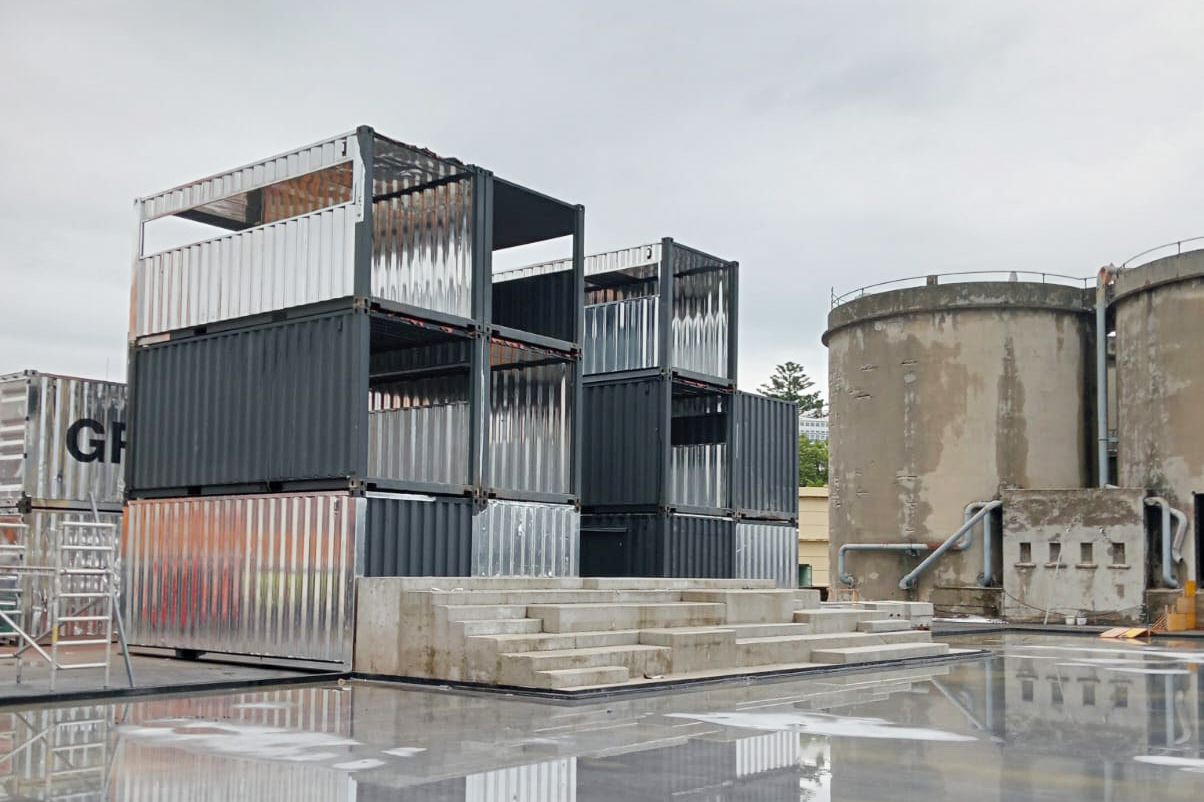
This new space was created using a technique known as ‘cargotecture’ – or ‘container architecture’ – a disruptive and cutting-edge method of modular construction using shipping containers.
For the initial project, INCOGA used high-quality containers with excellent resistance to environmental factors, which have been recycled and reused in every exhibition. This is an eco-friendly, sustainable initiative that is fully in line with the circular economy.
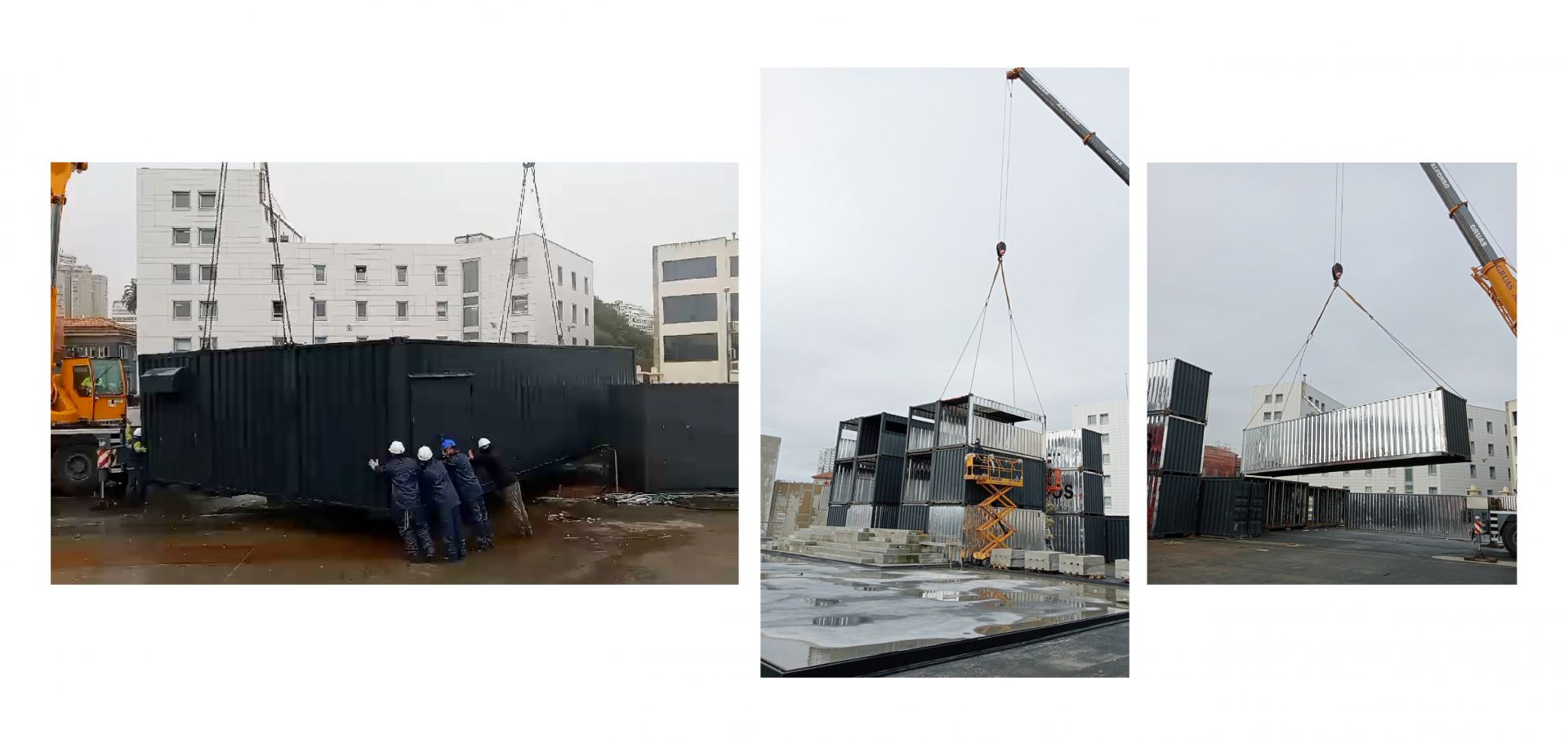
To do justice to the unique architectural design of Helmut Newton’s Fact&Fiction, as well as its scale and layout, INCOGA has undertaken the customisation of the containers, a task that required their appearance to be completely concealed. Through the use of panelling, their metal structure is hidden from view and transformed into a minimalist ensemble comprising a composition of volumes.
Large-scale decorative elements
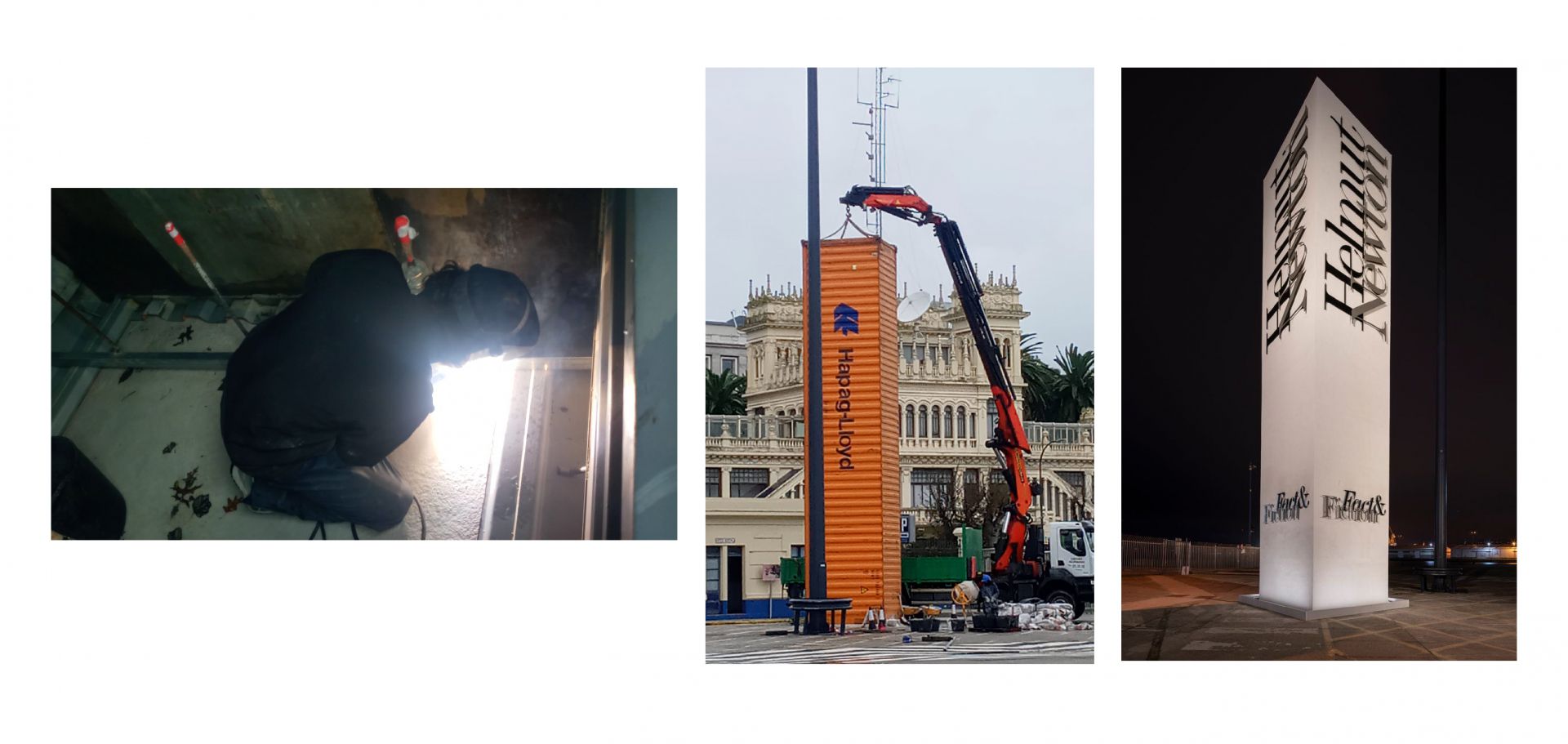
The entrance to the exhibition venue is dominated by a large obelisk that catches the visitor’s eye and welcomes them. It is a hollow, clad structure standing over 12 metres tall and weighing more than 25 tonnes. The construction of this totem posed a real challenge for the INCOGA team due to the enormous difficulty involved in moving it from its natural horizontal position to its new vertical orientation.
The complex securing of this large-scale element was designed and executed by INCOGA using a bespoke technical solution involving ballast and metal anchoring assemblies integrated with the base.
Technology and pinpoint accuracy
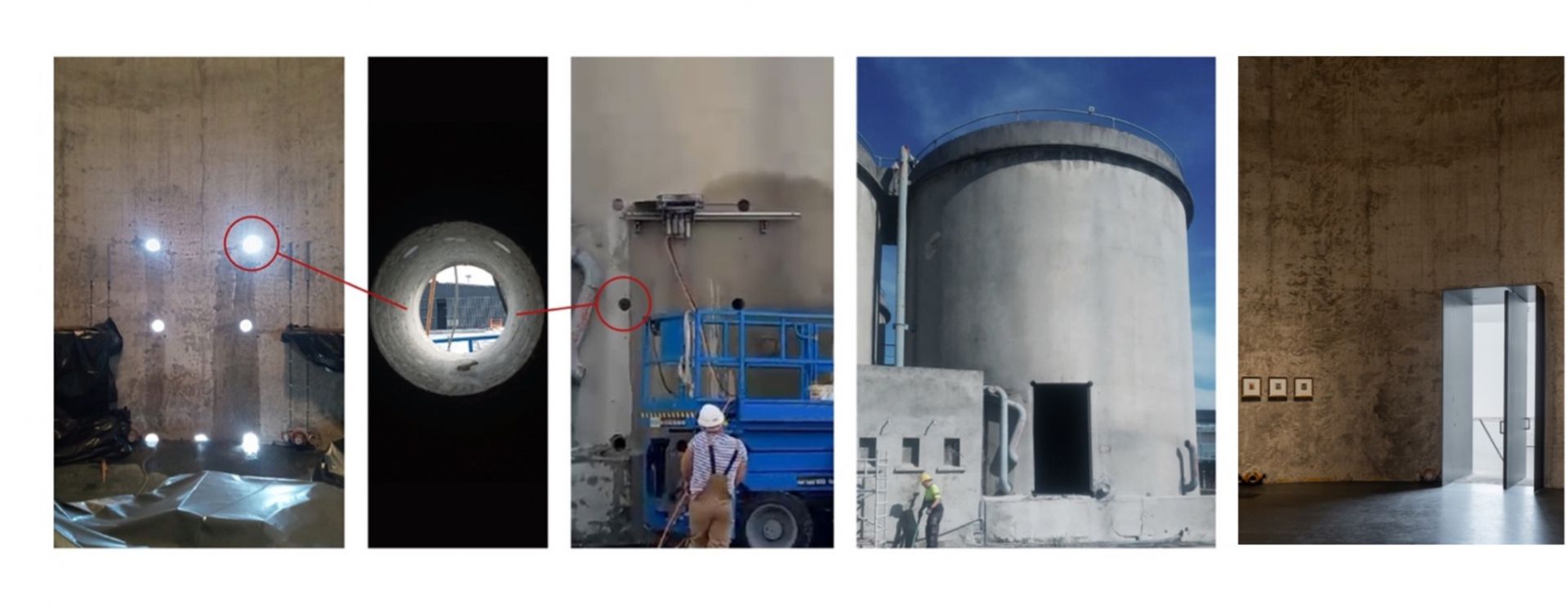
The refurbishment of the space to house this new exhibition required one of the three silos to be opened up to the outside; for the first time, it now hosts part of the photographic exhibition, welcoming visitors with original Polaroid photographs by Helmut Newton himself. Due to the fragility of the structure of this old silo, which dates back to the last century, the opening was created using state-of-the-art robotic cutting machinery and highly specialised labour. A truly ‘surgical’ operation, requiring extreme precision, with parameters so precise that they allow for no adjustments. This innovative work was completed with its spectacular enclosure: a large pivoting door weighing over two tonnes, which opens two-thirds of the way.
Infinity pool with precision overflow
The infinity pool, which serves a decorative purpose and is situated in the centre of the grounds, was constructed in a single piece using a concrete hardener. Just 10 cm deep, it maintains a precise overflow level thanks to a balancing tank of several cubic metres, which also ensures constant filtration.
Built-in screens and a distinctive staircase
The central section of the exhibition, attached to the concrete seating area that connects it to the pool, features an internal tunnel with several projection screens that have been fitted flush against the wall with millimetre precision by INCOGA. Halfway along this corridor, a staircase leading to the stands has been built; its distinctive feature is that it does not touch the side modules, leaving a gap of a few millimetres on either side, which made the formwork removal process very complex.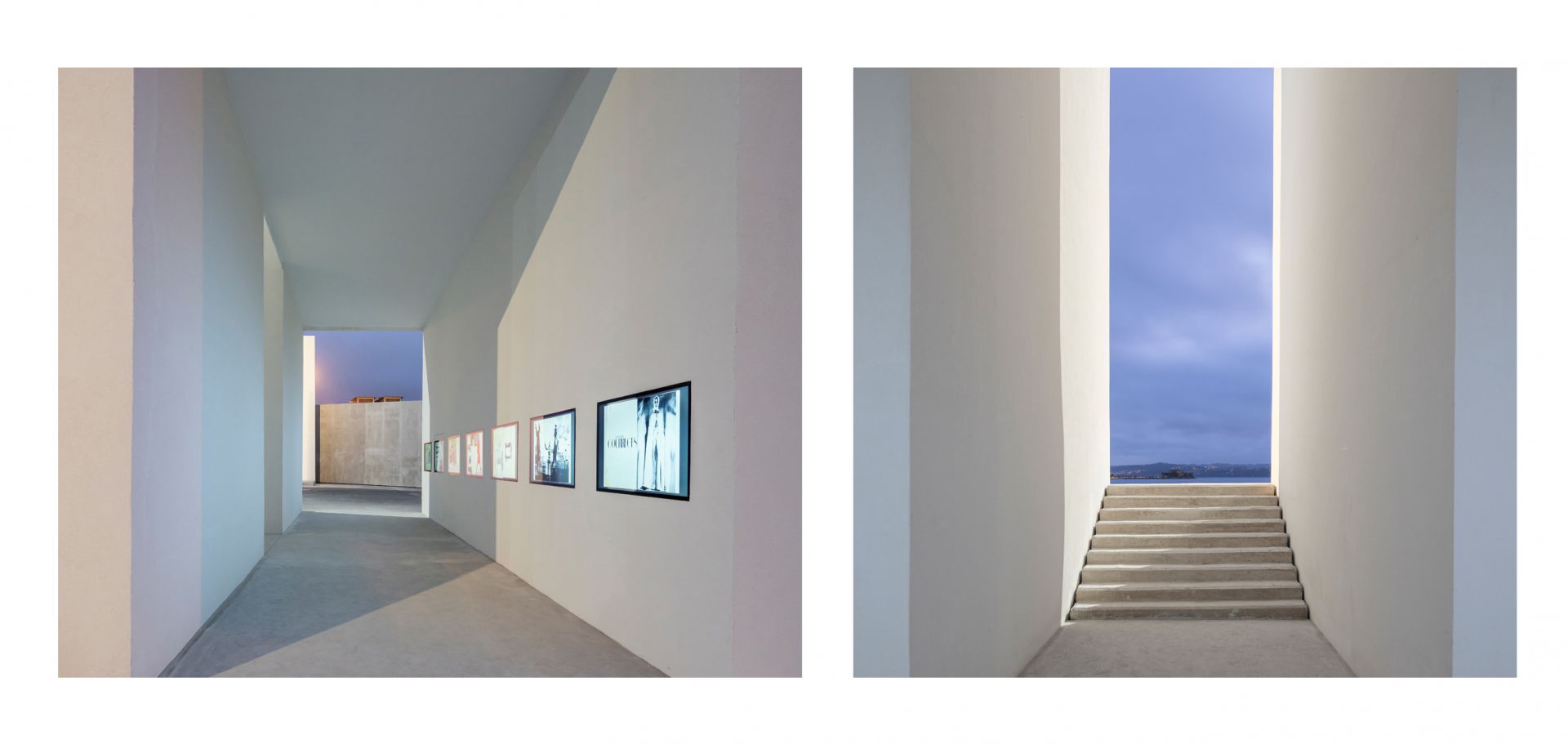
State-of-the-art solutions
In order to preserve the integrity of the artworks, a powerful system was installed to control ambient humidity, temperature and CO? levels; this system is capable, if necessary, of removing one cubic metre of water every 24 hours. INCOGA was also responsible for thermally insulating the entire exhibition hall using sprayed insulation materials, manufactured using industrialised construction methods. It also installed an emergency power supply line to guarantee power for 24 hours in the event of a power cut.